
On June 24, 2022, the US Supreme Court overturned Roe v. Wade by a vote of 5-4, a law passed in 1973 that has resulted in the murder of over 60 million Americans over the past 50 years. This is a historic decision awaited by many and considered unfeasible only a few years ago. How did it all begin and how did this mass genocide come to be?
The Constitution in defense of the right to life
If babies don't have a right to life, nobody does.
In the context of the United States Constitution, law refers to the national government and the civil body. The Constitution implies many rights and expressly states others.
The Bill of Rights—the first ten amendments to the Constitution—existed to specifically enumerate the rights for which the Anti-Federalists would be threatened.
Political philosophers have divided rights into two distinct categories: negative rights and positive rights.
Negative rights are rights that require the restriction of other people. For example, a citizen has the right not to be attacked; violators of this right will be brought before a court to answer to the charge of assault.
Affirmative rights require action by others. For example, the Affordable Care Act relies on doctors providing their services to individual citizens based on the citizens' rights under the law.
Supporters of the Affordable Care Act articulated an affirmative right to health care so that a person has the right to competent health care from a professional health care provider.
There are serious ethical implications of being entitled to someone else's services. During the era leading up to the American Revolution, it was common to talk about the right to liberty and property.
In the Declaration of Independence, Jefferson instead chose the phrase life, liberty, and the pursuit of happiness. The change clarifies that men do not have a positive right to property that should be granted by those who already own property.
They have a negative right to pursue property and secure it by some legal means without trampling on the rights of others—or to have the property granted to them by the government, which should confiscate it from someone else.
The role of the written constitution
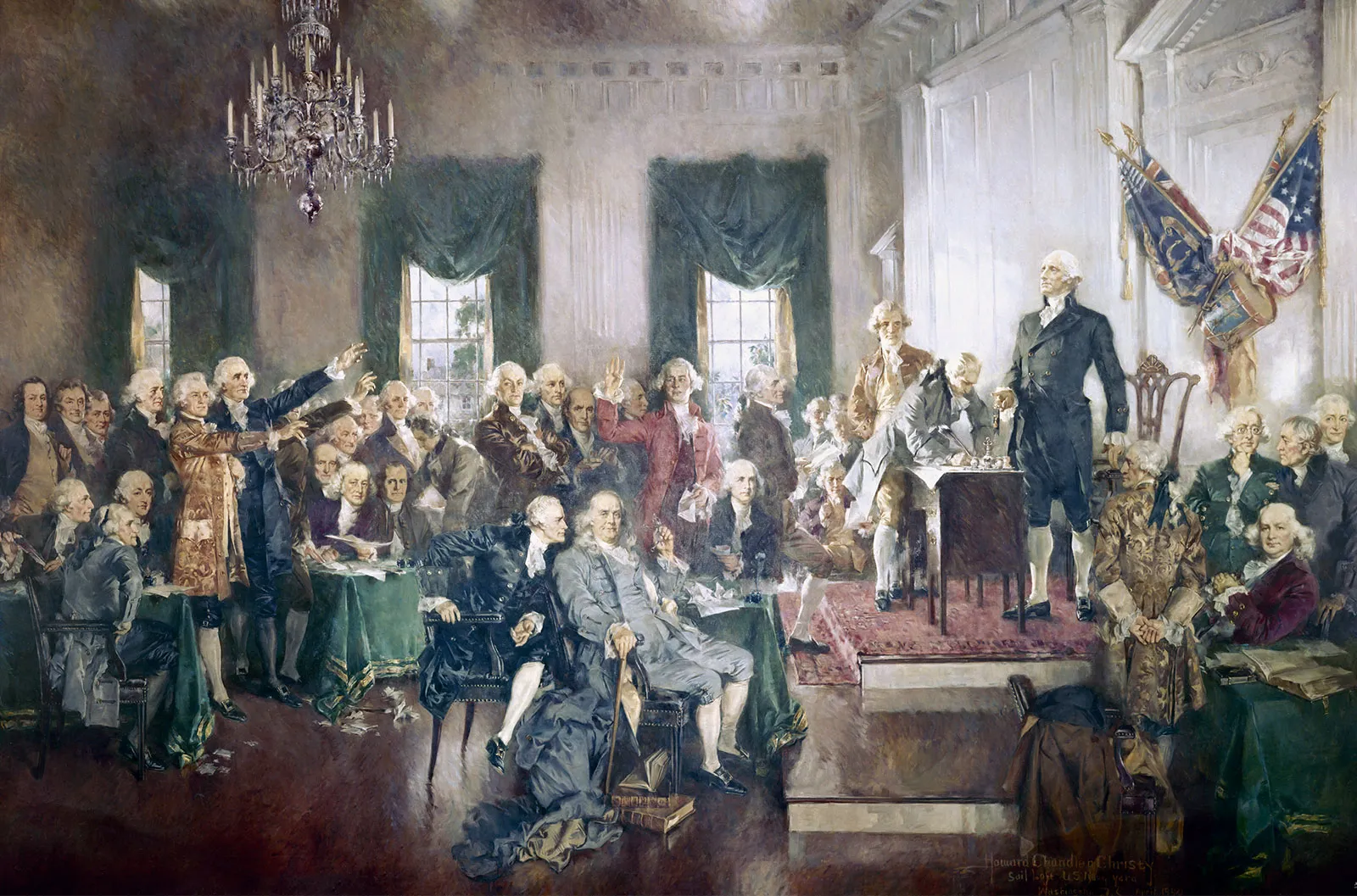
The United States Constitution was written by a group of thinkers who knew that state power was dangerous and should be limited by express rules about what government could not do.
The Bill of Rights exists to list the actions that the federal government cannot do. If one were to reread the bill of rights with a fresh eye, it is clear that it creates new rights.
It states that the rights already exist and it is illegal for Congress to violate them. The rights in the Constitution and the bill of rights do exist before the constitution. This information should form the definition of a constitutional right.
Today, the concept of constitutional law is routinely abused. Technically no constitutional rights. The Constitution simply protects those rights that have always existed and will continue to exist without any of America's founding documents.
In our context, however, we can assume that when someone claims a constitutional right, he or she notes that the Constitution restricts the infringement of the free exercise of some activity.
This is what pro-choice advocates mean when they argue for a constitutional right to abortion.
The role of the Supreme Court judge
In the United States, judges have the power of judicial review.
This was determined in one of the first landmark cases of the newly created United States Supreme Court: Marbury v. Madison. This is the main check against the legislature that the judiciary has in its arsenal.
In the English common law system—from which most of the United States Constitution derives—much of the constitution is unwritten. Indeed, judicial opinions are an exception. The Constitution of the United States was put into writing to prevent it from being torn apart over the years.
Judges are tasked with evaluating laws passed by the legislature and the enforcement of those laws by the executive branch to determine whether they conflict with the Constitution, the supreme law of the land. Simply put, the Constitution is a list of rules that the government must follow, not the people.
Judges must be guardians, ensuring that the government stays within its assigned duties and enumerated powers and does not deprive any citizen of their rights without good cause and due process.
So, is abortion a constitutional right? There are two possible answers to this question. Either the answer must be that there is a protected right to legal abortion, or that the framers rejected abortion and the very wording of the Constitution makes abortion illegal. If the latter is true, the state must uphold that truth or collapse under its own illegitimacy.
There is no neutral position. The Constitution is not silent on the issue of abortion, although it never explicitly uses the term. The text and context of the United States Constitution prohibits abortion entirely. Any other interpretation is bad constitutional law.
Abortion is not a right. On the contrary, the fundamental right enjoyed by human beings created in God's image is the right to life.
Abortion is a direct violation of the right to life.
Human rights
During the Enlightenment—which greatly influenced the development of the Constitution—philosophers devoted much ink to the question of the origins of human rights.
Since most of these philosophers were educated in a Christian society, they maintained a theistic worldview. Some of them were not Christians, but all recognized the existence of a Creator God. It is relatively easy to trace the rights of man to God, who created man in His own image and imbued him with special dignity.
The Enlightenment also brought many misguided attempts to find a source for human rights outside of God. The most common variant was the laws of nature, and the language of natural law became common among the educated classes at the time.
Most honest philosophers who wrote in those days acknowledged the source of natural law; often the idea of natural laws and a natural God was seen in the essays of the day.
It is impossible to explain any version of moral or legal law without a moral God to define what is legal. This is indeed the homeland of Christianity. God is unchanging and He has given us laws and moral guidance. A study of Scripture reveals that God is the source and protector of all human rights.
There is a right to life because it is unlawful to take life without reason - only God can determine the justifiable taking of life. There is a right to property because God forbids coveting and stealing. There is a right to seek happiness because God has revealed Himself to His creation and sent His Son to die and reconcile sinners to Himself.
Rights cannot be accounted for without God
Without a moral God to whom men are accountable, the idea of law makes no rational sense.
When trying to answer questions about morality in debate, atheists often fall back on the idea that everything is moral as long as it doesn't violate other people's rights. This standard is depraved, but it's still a standard. Where does this standard come from? Why should the rights of others stop anyone from doing anything?
Indeed, this standard would justify a ban on abortion, which clearly tramples on the rights of the unborn. Many modern atheists have abandoned this approach; some admit that nothing matters in their worldview and that morality should not exist within them. While this view is philosophically coherent, it is also terrifying.
The rights are listed from God's Word
The rights of the first ten amendments recognize the biblical worldview as the basis upon which rights are reserved by the people.
While the Founders would have readily acknowledged the eternal consequences of certain moral decisions, they adopted the position known as classical liberalism. They believed that the state was not fit to punish some private sins.
The Founders made it a law that Congress could not establish a religion by law. The founders were mostly Christians, but they did not make a law that Christianity should be the religion of the entire nation. They recognized that it was not the government's role to enforce religion, since the nation their ancestors had fled had tried the Anglican faith.
How did the founders come up with this idea? The Bible clearly teaches that Christianity is the only way to God. To put it bluntly, in the eyes of the government, one has the right to choose hell. A man's society may shun him for bad behavior, his family may call him to repentance, or his church may discipline him, but his government is not in the business of telling him how to approach God.
Why? Because it is clear from the Bible that many people choose to die in their sin and worship idols, which the Lord God allows them to do until their death. This implies a person's right to worship as he wishes. However, they will have to pay the consequences to the eternal judge - not the state judge, but the final judge.
The Bible Defines "Man"
Human rights are the rights enjoyed by all members of the human family, not just men.
Then what is man?
Christians have always opposed abortion and infanticide. The main basis for this opposition is the belief that all human life has intrinsic value to God. We know this most fundamentally because he sent his son Jesus to die for people.
Jesus was conceived as an unborn baby and born of a virgin. He was God incarnate from the moment of conception. By taking on flesh, Jesus proclaimed the dignity of the human person.
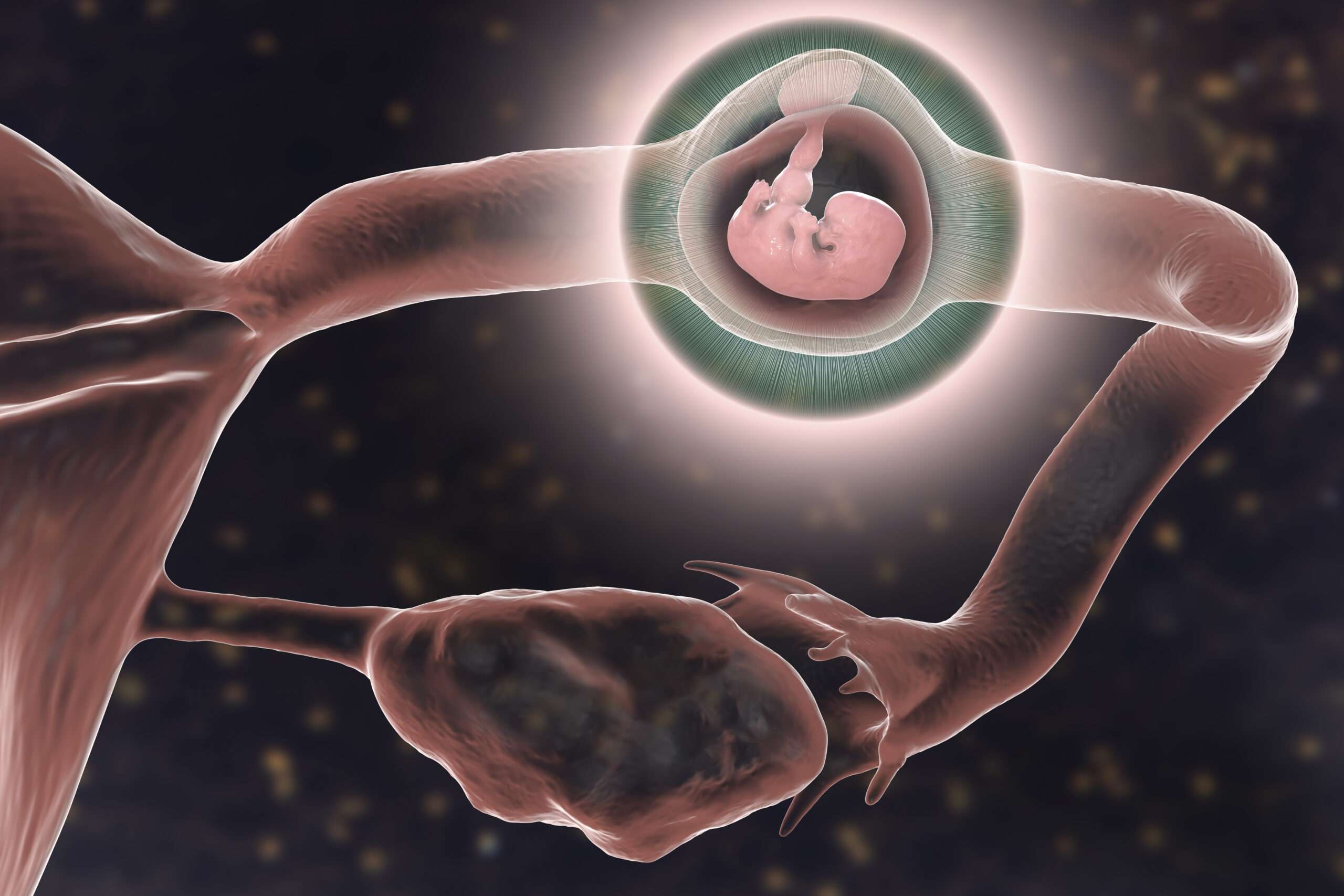
God knows babies from their mothers' wombs. We recognize the logical reality—confirmed by the biblical account of creation—that all creatures reproduce after their own kind. Human beings beget more human beings.
An experienced ornithologist will probably be able to identify a mystery egg by its species after careful examination. The egg contains the offspring of the bird; he is part of that species. Human fetuses/embryos are also human beings; they are part of the human species.
Is there such a thing as a constitutional right to abortion?
In 1969, Norma McCorvey became pregnant after consensual sex. She was a resident of Texas; Texas law, however, prohibited elective abortions except to protect the life of the mother.
McCorvey attempted to have an abortion by lying about being raped, believing that in doing so she would be granted an exemption from abortion laws. She found lawyers who tried Henry Wade, the Dallas district attorney.
McCorvey was given the pseudonym Jane Roe to protect her privacy—in fact, a similar and contemporaneous Georgia abortion decision case, Doe v. Bolton, had already used the name Jane Doe for the same reason.
McCorvey's case was taken to the Supreme Court in 1971. After hearing arguments from McCorvey's attorneys and from Jay Floyd, who represented Texas, the court ruled 7-2 in favor of Roe, and the court overturned existing state abortion laws.
The court invented the right to abortion in Roe v. Wade, which is still revered on religious grounds by the pro-choice community to this day. The Supreme Court's majority opinion, written by Harry Blackmon, based on the right to privacy, refused to define life and the “interests of the state.
The right to privacy
Citizens' right to privacy can be reasonably inferred from the Third, Fourth, and Fifth Amendments. These amendments recognized previous intolerable atrocities committed by the British government against the colonists before independence was achieved.
Roe v. Wade was one of the first cases in American history in which the Court expressly recognized that the right to privacy could be found in the Constitution. Justice Blackmon's decision in Roe v. Wade primarily relied on the Fourteenth and Ninth Amendments.
The Ninth Amendment exists primarily as a blanket statement, implying that the Bill of Rights does not contain every possible right that people may have. Justice Blackmon took this amendment to state that "the reservation of human rights is broad enough to encompass a woman's decision whether or not to terminate her pregnancy" (Roe, 410 US at 153).
Justice Blackmon also used the concept of the Fourteenth Amendment to imply that a woman's right to privacy somehow implied a right to terminate a pregnancy.
Strangely, the justification for the right to privacy was about the issue of mental health and vague allusions to the psychological distress to all concerned if a woman was not allowed to have an abortion when she wanted. Justice Blackmon relied heavily on the Fourteenth Amendment to establish the idea of abortion as protected by the right to privacy.
The dissenting opinion in Roe v. Wade was written by William Rehnquist, who noted that at the time of the adoption of the Fourteenth Amendment after the Civil War, the idea of protecting abortion would have been completely foreign to the amendment's authors, as there were dozens of states with bans on abortion. abortions — many with exceptions to protect the life of the mother — already in the law. At the time, no conflict was perceived between the Fourteenth Amendment and existing abortion laws.
As the majority of justices had difficulty gathering consensus on which part of the Constitution presupposes a right to privacy, and subsequently that the right to privacy presupposes a right to abortion, they eventually stopped trying to precisely anchor the right to any particular place.
The Supreme Court also found that because the right to abortion is implied, a woman's right to choose cannot be infringed by the Due Process Clause found in the Fourteenth Amendment.
The definition of life
One of the most obvious failings of Justice Blackmon's majority opinion in Roe v. Wade was his flat refusal to accept the legal definition of when life begins.
He argued that because doctors, philosophers, and theologians disagreed on the subject, the judiciary was absolved of any responsibility to determine when a fetus becomes a person. Jay Floyd, who argued in defense of the Texas statute, argued that life begins at conception and therefore the fetus has rights that must be protected by the courts.
The court bases its opinion on when life begins, using the trimester framework. The Court's findings constitute a decision that a woman has a right to abortion that is mostly unrestricted in the first trimester, regulated for the woman's health in the second trimester, and may be prohibited or strictly regulated in the third trimester.
Therefore, the decision defines life as beginning in the third trimester. They chose the third trimester because it was the earliest the fetus could survive outside the mother's body.
Modern debates about abortion still refer to the Supreme Court's definition of life as decided in Roe v. Wade. Arguments on the topic continue to appeal to viability, undue burden, women's rights, and reproductive health.
In other words, the debate is anchored in a mother-centered view of pregnancy and childbirth. It does not recognize that there are at least two different people affected by an abortion.
The state interest
Judge Harry Blackmon recognized that a woman's right to choose an abortion is not unlimited. Relying on the trimester framework to help reinforce the practical implications of their decision, the Supreme Court found that the right to abortion must be balanced against the state's interest in protecting women's reproductive health and the state's interest in protecting potential life .
For this reason, states and localities continue to enact legislation that reduces access to abortion. Planned Parenthood v. Casey was another Supreme Court case that tried to clarify the abortion issue. The biggest addition to the debate was the shift to the standard for judging laws based on the idea of undue burden.
No law can be passed that unduly burdens a mother's right to choose to abort her unborn child. It devastated state laws that sought to place barriers against mothers who easily choose to abort their unborn children on moral grounds.
People in the United States feel differently about different types of abortion, a troubling reality that reveals that the flawed definition of life based on the "viability" test has captured many Americans' definitions of what it means to be human.
However, it also shows that fewer people overall support more extreme positions on abortion. Generally speaking, the population of the United States opposes abortion.
Yet many feel more comfortable with abortifacient drugs than with partial-birth abortion. The closer the baby is to full term, the harder it becomes for the general population to support abortion.
Roe v. Wade gets the most press because it opened the door to abortion on a large scale; however, Gonzalez v. Carhart upheld federal law prohibiting partial-birth abortions. In that case, the Supreme Court used Blackmon's own opinion to deny the right to partial-birth abortion because Blackmon emphasized the state's interest in protecting fetal life.
A partial-birth abortion destroys a viable baby. This is said to be balanced against the threat to the mother's reproductive health and the standard of not unduly burdening access to abortion.
The medical evidence at the time was inconsistent, and the Court found no basis for rejecting Congress's view that partial-birth abortion was never necessary to save the mother's life and that access to it could be regulated by the Legislature.
However, this decision lacked the recognition of the baby's humanity under the viability standard that has doggedly adhered to legal decisions.
In each Supreme Court decision, the justices evaluate whether laws passed by Congress are valid under the United States Constitution. The biggest problem with all of the Supreme Court decisions on abortion is the outright denial of the most basic right of all - the right to life.
Since the Court refused to recognize the humanity of the baby in the womb, they have no basis on which to judge the matter on other points. If these questions had been raised about a mother's right to choose to kill her unborn children, the Court would not have ruled differently.
Killing is now forbidden; federal courts should not rule on this issue.
This negates the obvious fact that the founders—most of whom were Christians—would have recognized the biblical definition of life. From the first moment of conception, the unborn child possesses all the rights protected by the Constitution—including the Fourteenth Amendment, which declares that all persons have the right to life and liberty unless, through due process, those rights are limited for just cause. Blackmon's citation of the Fourteenth Amendment is therefore deeply ironic.
Is Reproductive Health Right?
The difference between negative law and positive law was demonstrated earlier. The Supreme Court's opinion in every major decision on abortion will contain language such as a woman's right to seek an abortion.
The word seek is important because a woman does not have the right to have an abortion; in the Court's understanding, she is instead entitled to find an abortionist and pay him for the service.
One of the tactics of the pro-choice camp is to convince the population of their legitimacy. Planned Parenthood gets most of its revenue from abortion procedures. Planned Parenthood also distributes contraceptives and performs some legal clinical functions, but their business would collapse if the law recognized the right to life of babies in the womb and restricted access to abortion accordingly.
Although supporters of the debate have settled on the right to seek an abortion, they are increasingly pushing to get rid of the demand gap. Planned Parenthood and pro-choice lobbyists continue to fight for more taxpayer-funded abortion procedures.
They constantly try to shift the context of the debate to the argument that women do not have the right to seek or access an abortion, but the right to have an abortion on demand. If women have the right to an abortion, the procedure must be provided by someone.
This argument is similar to the idea that all children have a right to education. Based on the right to education, the government was given the mandate to create, finance and implement compulsory education laws.
Since enslaving OB-GYNs and forcing them to perform the operation is not yet fashionable, the easiest way is to pressure Congress to subsidize their operations with taxpayer money.
If there are abortion rights, then not only will tax money be used to fund the killing of children, but any product or service can be labeled as a right. In 1980, a pro-life senator added an amendment to a bill that prohibited the use of tax dollars on abortions for anyone receiving federally funded health care, including Medicare and Medicaid recipients.
The so-called Hyde Amendment was a big step in the right direction to stop the use of federal taxes to fund infanticide.
Roe v. Wade is rotten to the core
The truth is that Roe v. Wade is a terrible court decision. Even abortion apologists agree that the justices who wrote the majority opinions were inconsistent and illogical.
Roe v. Wade was a major setback for a nation that seemed to be reclaiming some of its truly liberal identity. Civil rights were making real progress at this time in history; universal suffrage was the law of the land; slavery is an institution of the past.
With one decision handed down by the Supreme Court, the United States has returned to the stone age of human rights. Subsequent decisions of the Court have only confirmed that the American people are completely lost in the field of morality.
If babies don't have a right to life, no one has a right to live. Abortion lobbyists contradict the constitution as it was originally written, as well as its subsequent amendments. The court invented a new constitutional right of access to abortion, but denied the first constitutional right to life.
The founders of the United States did not include the concept of abortion explicitly in the Constitution because it is universally recognized as a moral evil that can and should be outlawed. It was a crime so heinous that it was not mentioned in polite society. The Constitution does not prohibit the killing of the unborn.
Save Life believes that abortion should be ended and banned immediately and without any exceptions. The laws usually have exceptions for cases of rape, incest or maternal health emergencies.
These exceptions should not be allowed. Science, historical data, and medical evidence do not support maternal health exemptions. Logic and morality do not support the death of a baby because the mother was abused.
Today we celebrate a big step in the fight against abortion in America, but there is still much work to be done and millions of mothers who want to kill their children in any way possible. Let us pray that God will grant repentance to all men and women who are willing to mercilessly tear apart their own children and that we will not stop speaking the truth to a society sunk in sin that is in rebellion against the True and Living God. As the Bible itself tells us, man is dead in sin before God opens his eyes and our role as people who know the truth is to speak to the unsaved to repent and believe in the Only One who can wash away their sins - the Son of God, Jesus Christ.
Ephesians 2:1-9
“And revive you when you were dead through your transgressions and sins,
2 in which you once walked according to the course of this world, according to the prince of the power of the air, of the spirit which now works in the sons of disobedience;
3 among whom we all once lived in our carnal passions, fulfilling the will of the flesh and of the thoughts, and were by nature the children of wrath, like others.
4 But God, who is rich in mercy, because of the great love with which he loved us,
5 even when we were dead in our transgressions, quicken us together with Christ - by grace you are saved,
6 and, raising us together, made us sit with Him in heavenly places, in Christ Jesus;
7 in order to show in the coming ages the exceeding riches of His grace through His kindness to us in Christ Jesus.
8 For by grace you have been saved through faith, and not of yourselves; it is a gift from God;
9 not by works, lest anyone should boast.“

 English
 Bulgarian